Street lighting on stored solar.
Campus street lights switch on together in the evening, exactly when grid electricity costs the most. A dedicated solar and battery system moves that load off the grid entirely.
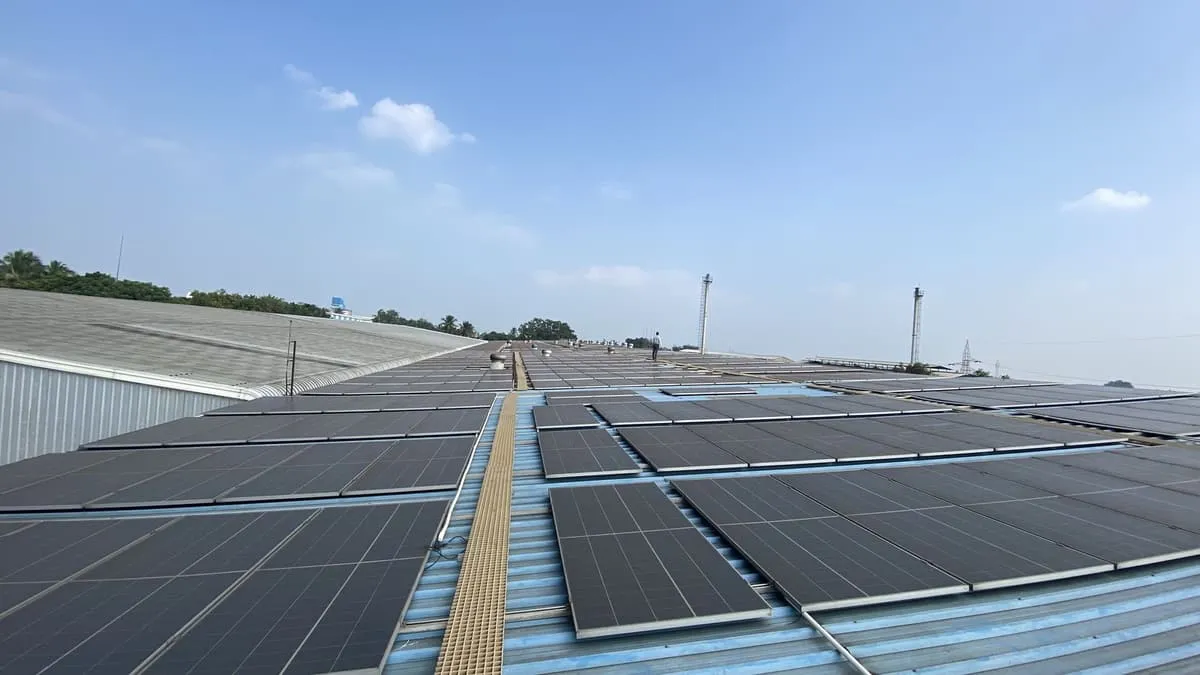
The requirement
An automotive manufacturing facility sees the pattern clearly. As production shifts end, hundreds of street lights come on at once. Each light draws little on its own, but together they lift the plant's demand during peak tariff hours, after the sun has set.
That surge shows up on the bill twice: as higher Maximum Demand charges, and as more units purchased at evening rates. For large campuses, outdoor lighting becomes a steady contributor to costs that have nothing to do with production.
Why more panels alone cannot fix it
A bigger on-grid solar plant looks like the obvious answer, but on-grid systems generate only while the sun is up. The lighting load begins after sunset, so extra daytime generation never reaches it.
The problem is not generating more solar energy. It is delivering that energy at the right time.
The WES solution
WES Energy approaches this with distributed 10 kW off-grid units built only for street lighting. During the day, each unit's panels charge a lithium battery bank through a charge controller that manages battery health. In the evening, the battery powers the lighting network directly, with no draw on the facility's supply and no additional demand during peak hours.
Each 10 kW unit carries around 25 street lights. Units repeat as modular clusters across a campus, so the lighting system grows with the site instead of being rebuilt for it.
Where this configuration fits
The distributed approach is suited to manufacturing plants, industrial campuses, logistics facilities, IT parks, educational institutions, transport terminals, ports, commercial parks and large townships with extensive evening or perimeter lighting.
Engineering before installation
WES Energy evaluates the facility's load profile, Maximum Demand, day and night consumption, lighting inventory, operating schedule, installation locations, expansion plans and expected payback before fixing the final system configuration.
- Maximum Demand
- The highest power draw a facility is billed for in a period. Evening lighting surges push it up.
- Peak tariff hours
- The evening window when each unit of grid electricity costs more.
- Off-grid unit
- Panels, lithium battery and controller serving one lighting circuit, independent of the grid.
- Modular cluster
- A repeatable 10 kW unit added as campus lighting expands.
Project results
The dedicated system moves the street-lighting load away from peak grid hours, reduces dependence on the facility supply and remains modular enough to expand with the campus. The design also keeps the lighting circuit independent from critical manufacturing operations.
Project gallery
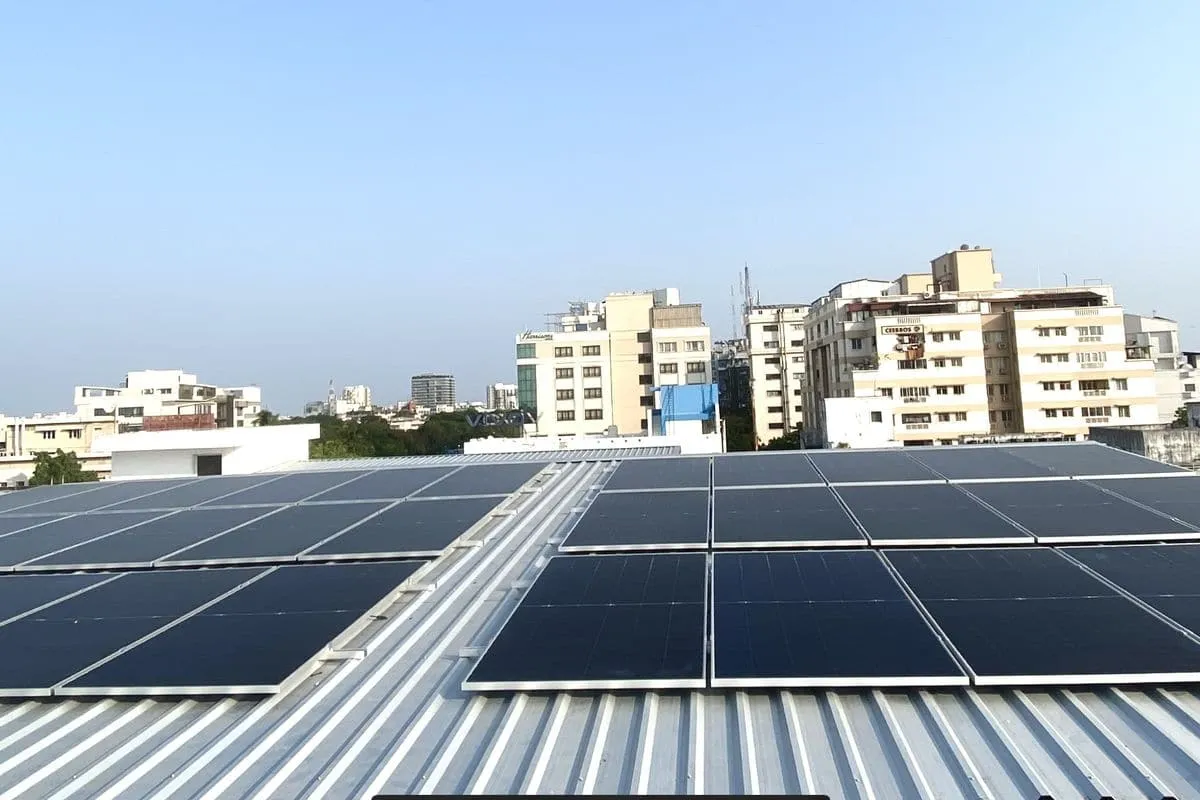
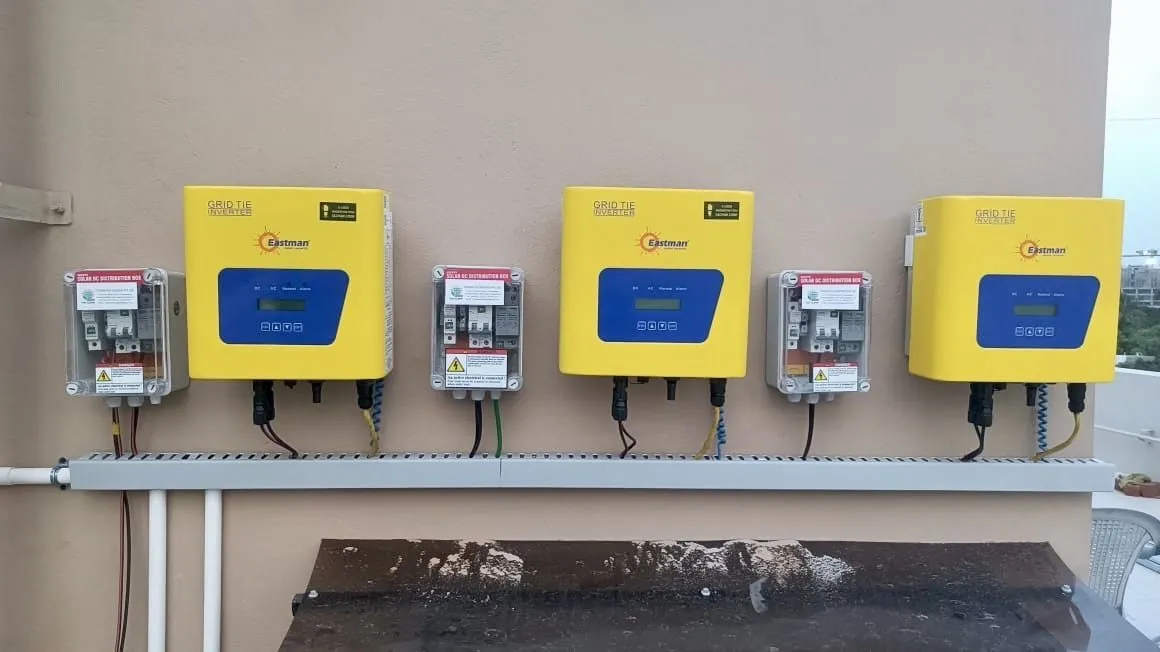
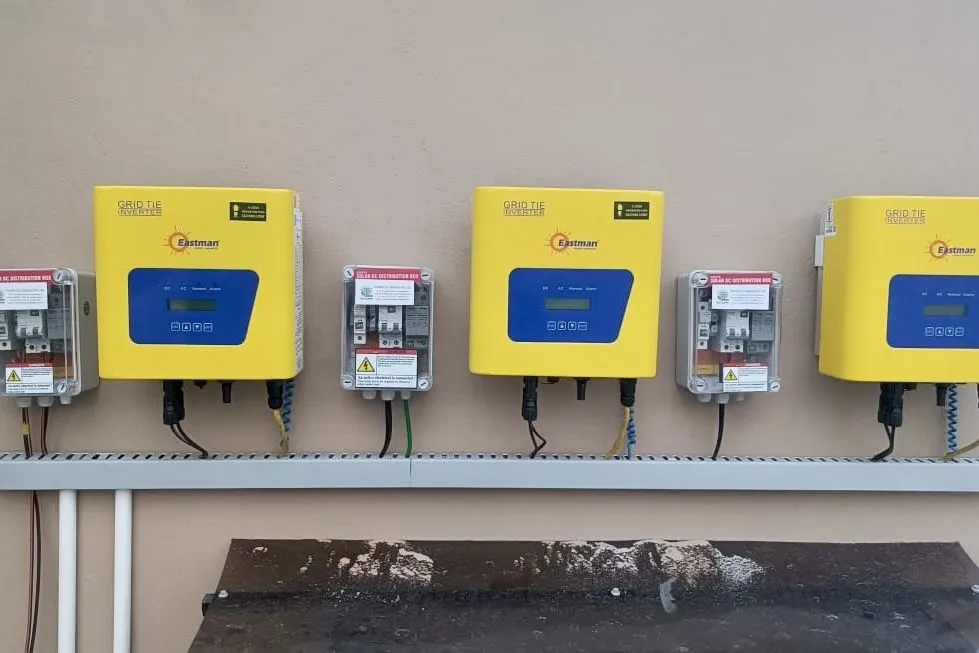
A closer view of the solar generation, site conditions and electrical equipment used to explain the distributed system approach.
Keep reading
Battery storage for large facilities
Peak shaving, load shifting and power quality from a centralized battery system.
View case study: Battery storage for large facilities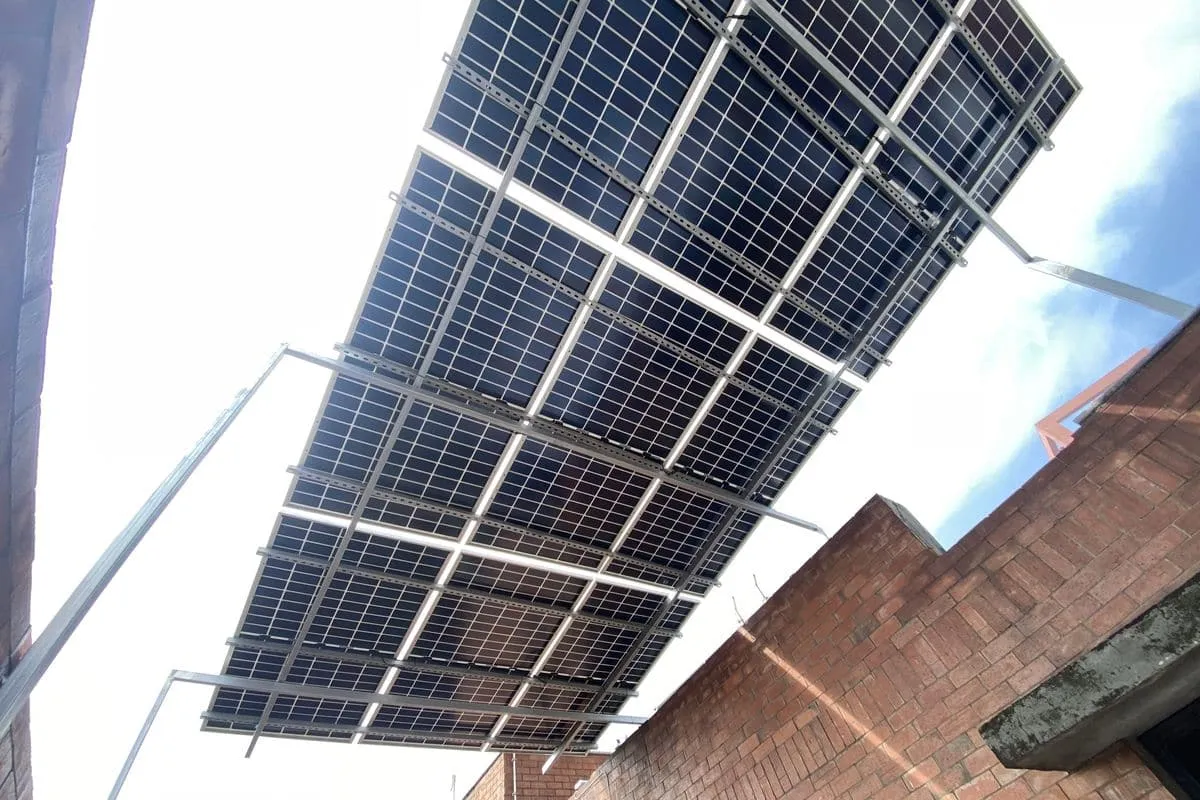
On-grid vs hybrid solar: which is right for your home?
Compare savings, battery storage, power backup and investment before choosing a home solar system.
Read guide: On-grid vs hybrid solar: which is right for your home?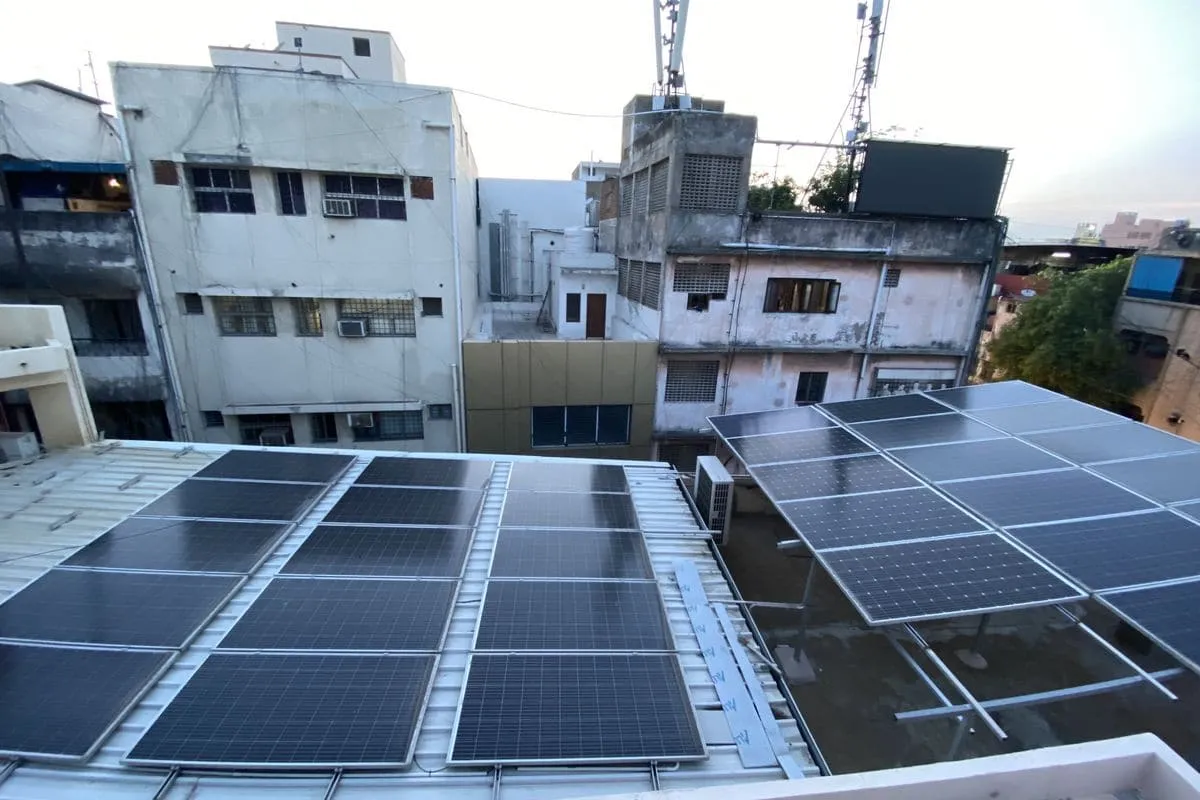
How Tamil Nadu generates electricity
The sources behind the state's grid and where solar sits among them.
View: How Tamil Nadu generates electricity
A large campus and a large lighting load?
Share your electricity bills and operating schedule and the WES Energy team will assess whether stored solar lighting pays back at your site.