If you are thinking about installing solar panels at home, the first question is usually simple:
How much can I save on my electricity bill?
Then the other questions start coming in.
How many solar panels do I need? Will they fit on my roof? What will the installation cost? Is there a subsidy? What happens to the extra electricity? And how do I know which solar company to choose?
Solar panel installation is easier to understand once you break it down into a few practical decisions.
This guide walks you through the process of installing rooftop solar in Chennai, from understanding your electricity consumption to choosing the right system, checking your roof, understanding the subsidy and getting the system connected.
The short version
- Start with your EB bill. Your electricity consumption is the best starting point for deciding how much solar you need.
- Plan around 100 sq. ft. of usable, shadow-free roof area for every 1 kW of solar. The exact layout depends on the panel size, roof shape, shading and available space.
- Solar panels generate electricity during the day. Your home can use that power directly, reducing how much electricity you need to buy from the grid.
- Eligible residential customers can receive up to ₹78,000 in central subsidy under the current PM Surya Ghar structure: ₹30,000 for 1 kW, ₹60,000 for 2 kW and ₹78,000 for 3 kW and above.
- The installation is more than the panels. The inverter, structure, wiring, protection, earthing, approvals, metering, testing and after-sales support all matter.
Is solar worth installing in Chennai?
For many homeowners, the decision to install solar starts with the electricity bill.
Every month, your home buys electricity from the grid. Your solar panels can generate part of that electricity themselves, using sunlight that is already available on your roof.
The more electricity your solar system can generate and your home can use, the less power you need to purchase from the grid.
But solar is a long-term investment. The question is not simply whether solar produces electricity. It is whether the right-sized system can generate enough useful energy to make the investment worthwhile for your home.
That is why two neighbouring houses can need completely different solar systems.
A home that consumes 600 units a month is not going to need the same system as a home consuming 1,500 units.
Your electricity bill tells you where to start.
How does a rooftop solar system work?
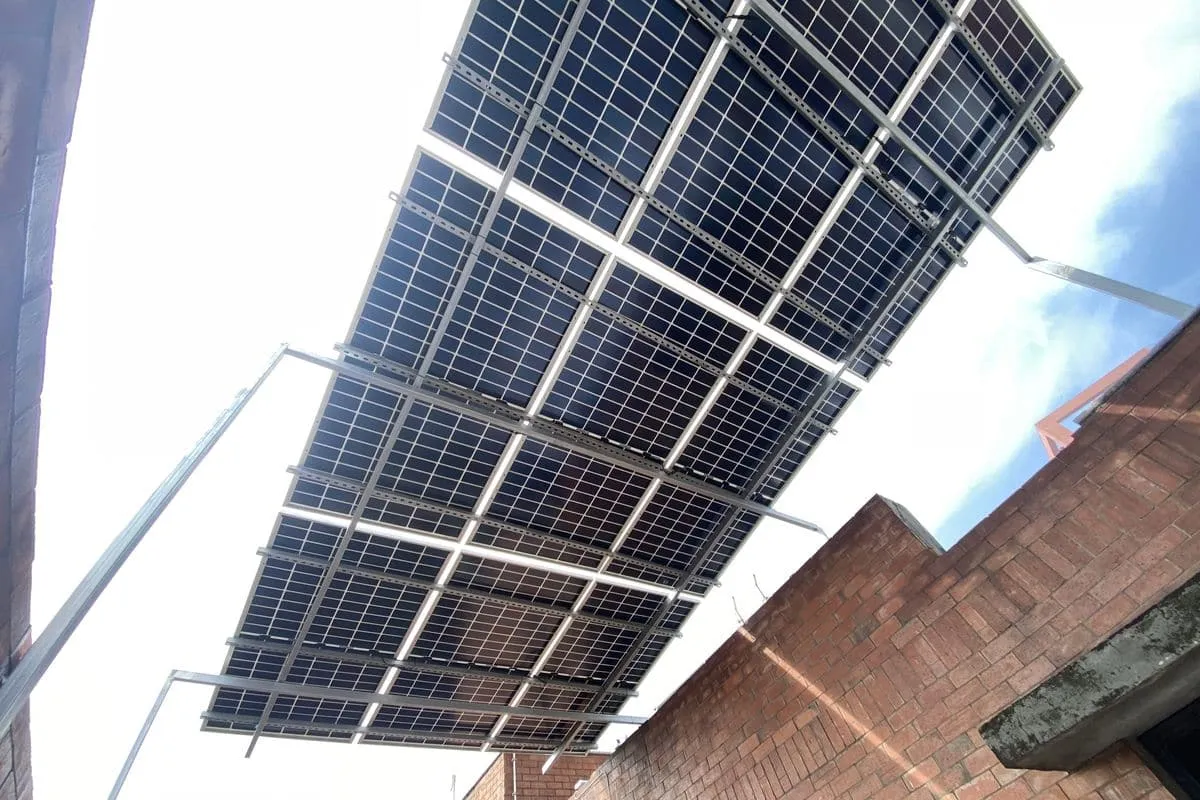
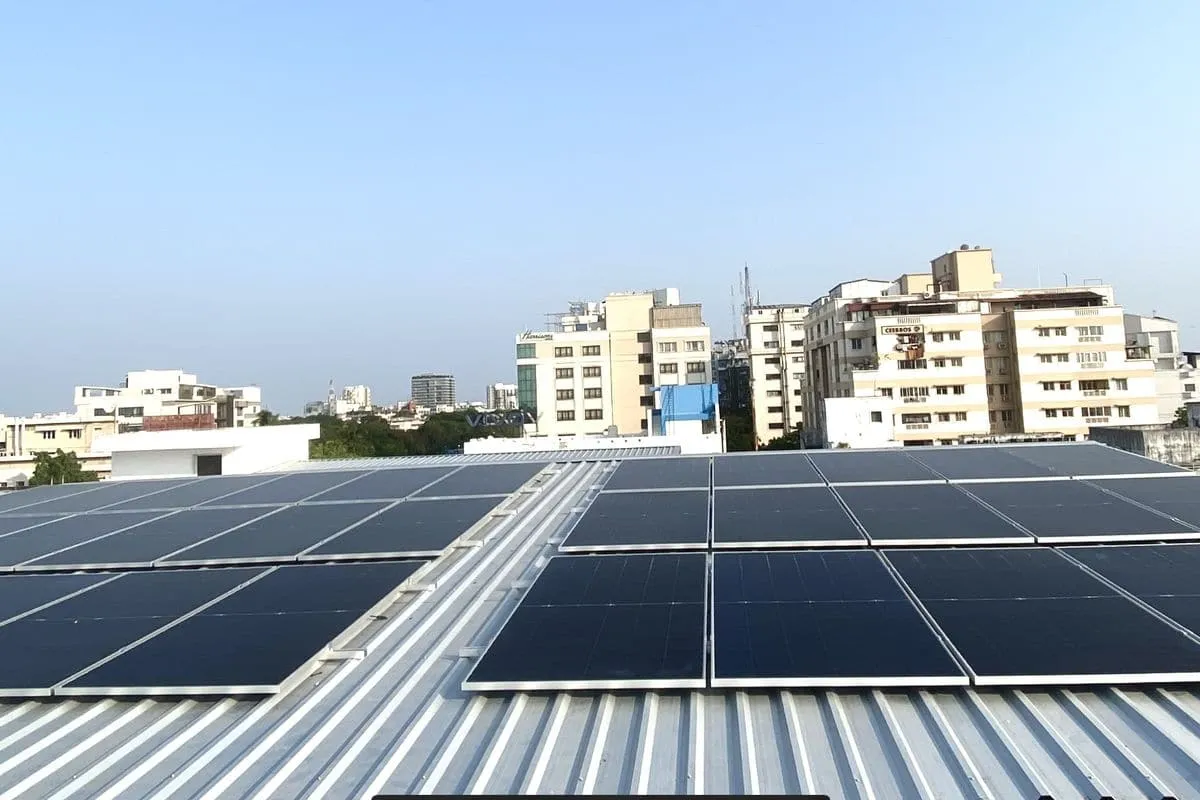
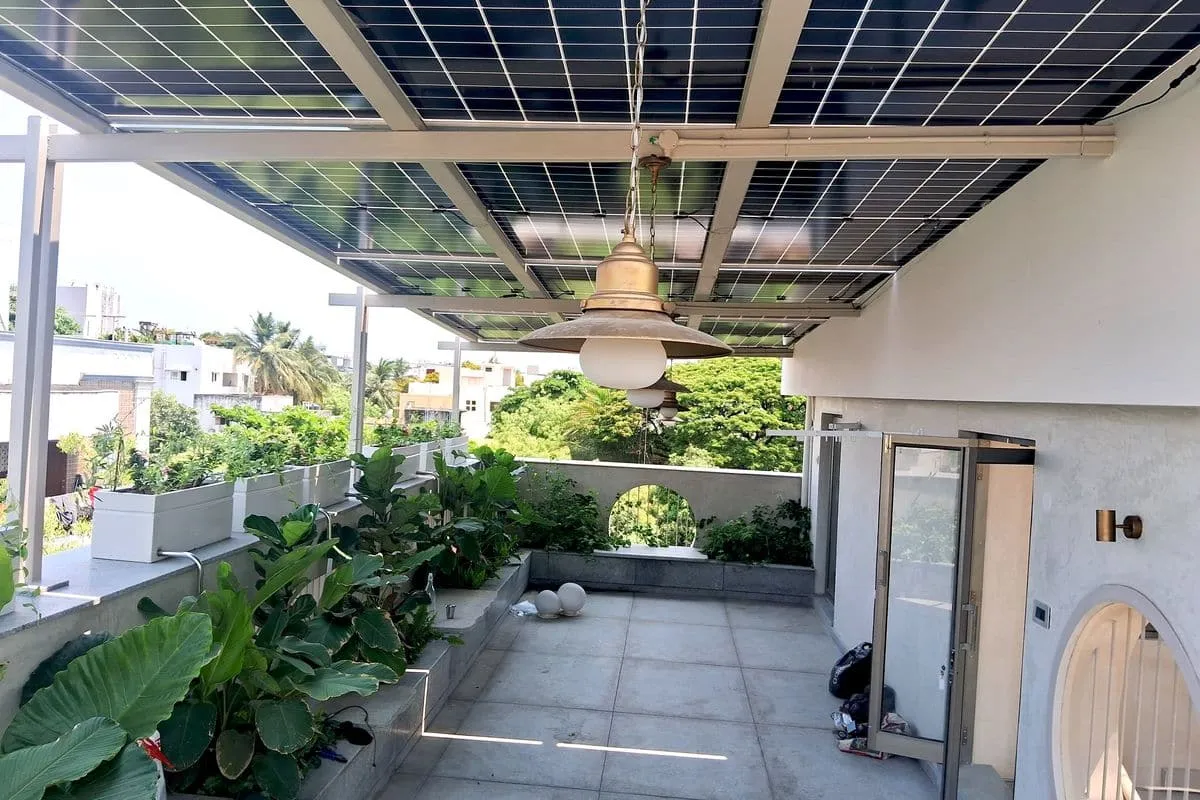
A rooftop solar system converts sunlight into electricity for your property.
The solar panels generate DC electricity. The inverter converts it into AC electricity that your home's appliances can use.
During the day, your home can use the electricity being generated by the solar system. If your solar generation is lower than your consumption, the balance can come from the grid.
When your solar system generates more electricity than your home is using, the surplus can be exported to the grid according to the applicable metering arrangement.
It is a fairly simple idea:
Sunlight → Solar panels → Inverter → Your home
And when solar isn't enough:
Grid → Your home
This is why a grid-connected solar system does not mean your home has to run only on solar power. The grid continues to work alongside your solar system.
How much solar do you need?
This is where your EB bill becomes useful.
Instead of starting with the size of your roof, start with your electricity consumption.
Look at your recent bills and find out how many units your home uses. Then estimate how much of that consumption you want your solar system to offset.
For example, if a home uses around 1,350 units every two months, a practical starting estimate could be around a 5 kW solar system.
The calculation is:
1,350 units ÷ 270 = 5 kW
The 270 figure is based on an average planning assumption of around 4.5 units generated per kW per day over a 60-day billing period.
This is an estimate, not a guarantee. Actual solar generation changes with weather, shading, panel orientation, equipment and system losses.
The important point is that solar sizing should begin with electricity consumption rather than simply filling the available roof.
A simple example
Imagine a home using:
1,350 units every two months
A 5 kW solar system can generate roughly:
5 kW × 4.5 units × 60 days = 1,350 units
On paper, the numbers match.
In real life, generation and consumption will not happen at exactly the same time. Your actual bill savings will therefore depend on your usage pattern, applicable metering arrangement and system performance.
That is why a proper solar assessment is more useful than relying on a simple online calculator alone.
How much roof space do you need?
A common misconception is that you need a huge terrace to install solar.
You don't.
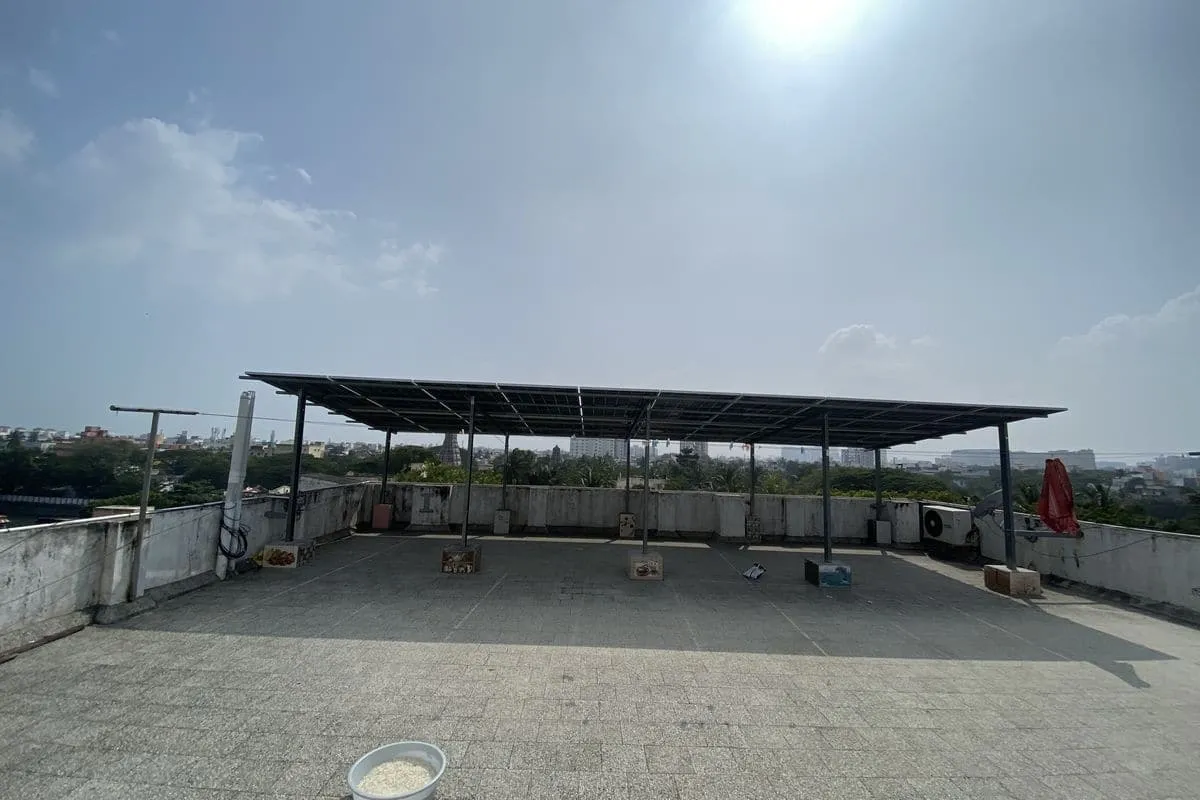
For practical planning, allow approximately 100 sq. ft. of usable, shadow-free roof area for every 1 kW of solar capacity.
| Solar system | Approx. roof area |
|---|---|
| 2 kW | 200 sq. ft. |
| 3 kW | 300 sq. ft. |
| 5 kW | 500 sq. ft. |
| 6 kW | 600 sq. ft. |
| 10 kW | 1,000 sq. ft. |
These are planning figures, not a fixed measurement for every roof.
The actual space required depends on the dimensions and wattage of the panels, how they are arranged, the roof shape and the space required around the system.
And there is an important word here:
Shadow-free.
- A 600 sq. ft. terrace does not necessarily mean you have 600 sq. ft. of usable solar area.
- Water tanks, staircases, parapet walls, trees, neighbouring buildings and other structures can reduce the usable area.
- In Chennai, where many homes have rooftop water tanks and compact terraces, a proper site assessment can make a significant difference.
What does a solar installation include?
When you compare solar quotations, don't look at the number of panels alone.
A complete rooftop solar system normally includes:
| Component | What it does |
|---|---|
| Solar panels | Generate electricity from sunlight |
| Inverter | Converts solar power into usable AC electricity |
| Mounting structure | Supports the panels on the roof |
| DC/AC cables | Carry electricity through the system |
| Protection equipment | Helps protect the system from electrical faults |
| Earthing | Provides electrical safety |
| Monitoring | Lets you track system generation and performance |
| Metering | Measures electricity flow as required |
| Installation | Puts the complete system together safely |
The quality of each part matters.
A good panel cannot compensate for poor wiring. A good inverter cannot compensate for a weak structure. And a well-designed system can still underperform if the installation is poorly executed.
Solar is a system, not just a panel.
How much does solar panel installation cost in Chennai?
- There is no single price for rooftop solar.
- The cost depends on the system size, panel technology, inverter, mounting structure, roof type, electrical work and the level of installation and support included.
- This is why comparing quotations only by ₹ per kW can be misleading.
- For example, two companies may quote the same system size but include different panels, inverters, structures, protection equipment, warranties or installation services.
When comparing a quotation, look at:
- Panel make and model
- Panel wattage and technology
- Inverter make and capacity
- Mounting structure
- DC and AC protection
- Earthing
- Wiring
- Installation
- Monitoring
- Approvals and documentation
- Warranty
- After-sales service
The cheapest quotation is not automatically the cheapest solar system over its lifetime.Please use Wes Energy Solar Calculator for an Estimate price.
What is the solar subsidy in Tamil Nadu in 2026?
For eligible residential customers, the current PM Surya Ghar subsidy structure provides:
| Solar capacity | Central subsidy |
|---|---|
| 1 kW | ₹30,000 |
| 2 kW | ₹60,000 |
| 3 kW and above | ₹78,000 |
So, if you install a 5 kW solar system, the maximum central subsidy under this structure remains ₹78,000.
The subsidy is subject to eligibility, approved equipment and the applicable application and installation process.
This can make a significant difference to the initial investment, but it is important to calculate your solar requirement first rather than choosing a system size simply because a particular subsidy is available.
What happens after you decide to install solar?
Installing solar is a process.
1. Understand your electricity usage
Your recent EB bills give you a picture of how much electricity your home consumes.
2. Assess the roof
The site is checked for usable area, shading, structure, access and the best location for the panels and inverter.
3. Design the system
The solar capacity, panel layout, inverter, structure, wiring and protection equipment are selected.
4. Complete the required application process
The relevant utility and subsidy documentation is completed based on your connection and system.
5. Install the system
The mounting structure is installed, followed by the panels, inverter, wiring, protection equipment and earthing.
6. Testing and approvals
The completed system is checked and the required inspection, metering and grid-connection procedures are completed.
7. Commissioning
The system is switched on, generation is verified, monitoring is activated and the installation is handed over.
A professional installer should take care of the process rather than leaving the homeowner to figure out every step independently.
What should you check before choosing a solar company?
- A rooftop solar system can remain on your property for decades.
- So the company you choose matters.
- Before signing a quotation, ask a few simple questions.
Is the system sized using my actual electricity consumption?
A good recommendation should have a reason behind it.
Has my roof been properly assessed?
The installer should consider shading, available area, access and rooftop obstacles.
What exactly is included in the price?
Make sure there are no surprises later for structure, wiring, protection, earthing, installation or documentation.
Which panels and inverter are being installed?
Ask for the exact make and model, not just the product category.
Who handles the approvals and paperwork?
A smooth installation includes more than the physical work on your roof.
What happens after installation?
Ask about monitoring, maintenance, warranty support and service.
The goal is not simply to get solar panels installed.
The goal is to have a solar system that continues to work well year after year.
On-grid or hybrid solar for your Chennai home?
Once you've decided to go solar, there is another question:
Do you need a battery?
- An on-grid solar system is primarily designed to reduce your electricity bill. It works with the grid and does not require battery storage.
- A hybrid solar system adds a battery, allowing you to store solar energy and use it later. It can also provide backup for selected appliances during a power cut.
| Feature | On-grid solar | Hybrid solar |
|---|---|---|
| Main purpose | Reduce electricity bill | Savings + backup |
| Battery | No | Yes |
| Power during a grid outage | No | Yes, for supported loads |
| Initial investment | Lower | Higher |
| Stored solar at night | No | Yes |
| System complexity | Lower | Higher |
| Best suited for | Bill savings | Backup + energy storage |
If your priority is saving on your electricity bill, on-grid solar may be all you need.
If you also want battery backup and the ability to store solar energy, hybrid solar may make more sense.
Is solar worth it for your Chennai home?
Solar works best when it is designed around your property rather than sold as a standard package.
- Start with your electricity bill.
- Understand your consumption.
- Check your usable roof area.
- Estimate the solar capacity.
Then compare the investment, subsidy, expected generation and long-term savings.
For example, a homeowner with a high electricity bill and a suitable roof may benefit from a larger system, while a smaller home with lower consumption may not need to use all its available roof space.
There is no prize for installing more solar than you need.
The right-sized solar system is the one that matches your electricity consumption, roof, budget and long-term goals.
And that is the real starting point for solar panel installation in Chennai.
Frequently asked questions
How many solar panels do I need for a house in Chennai?
It depends on the solar capacity you need and the wattage of the panels. The number of panels should be calculated after determining your required system size.
How much roof space is required for 1 kW solar?
For practical planning, allow around 100 sq. ft. of usable, shadow-free roof area per 1 kW. The exact space required can vary depending on the panel size, roof layout and installation requirements.
What is the subsidy for 3 kW solar in Tamil Nadu?
Eligible residential customers can receive ₹78,000 in central subsidy for a 3 kW system. The current structure is ₹30,000 for 1 kW, ₹60,000 for 2 kW and ₹78,000 for 3 kW and above.
Can solar panels work during cloudy or rainy weather?
Yes. Solar panels generate electricity from available sunlight, not heat. Generation will generally be lower when sunlight is reduced, but the system can continue producing electricity.
Does an on-grid solar system work during a power cut?
A standard on-grid system shuts down when the grid is unavailable. If you need backup during power cuts, a hybrid system with battery storage should be considered.
How long does a rooftop solar system last?
Solar panels are designed for long-term operation, with manufacturers typically providing long performance warranties. The actual lifespan of the complete system also depends on the inverter, structure, installation quality and maintenance.
What is the first step to installing solar in Chennai?
Start with your recent EB bills and a roof assessment. Once you understand your electricity consumption and available shadow-free roof area, you can work out what size solar system makes sense for your home.