For a factory, electricity is not just another monthly expense.
Machines, compressors, pumps, motors, chillers, lighting and production equipment can consume thousands of units every month. As electricity costs rise, the power bill can become a significant part of the cost of running a manufacturing business.
This is where industrial rooftop solar can make a difference.
A factory already has something solar needs: a large roof and, in many cases, a significant daytime electricity load.
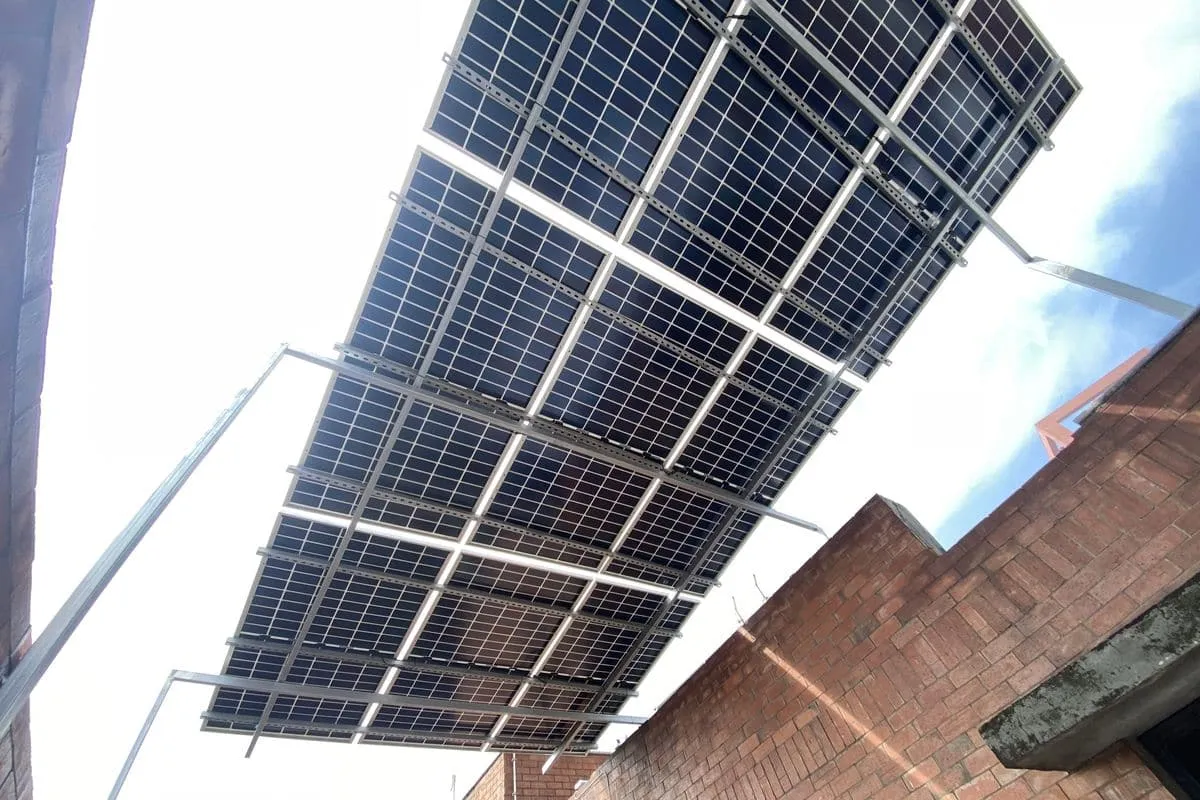
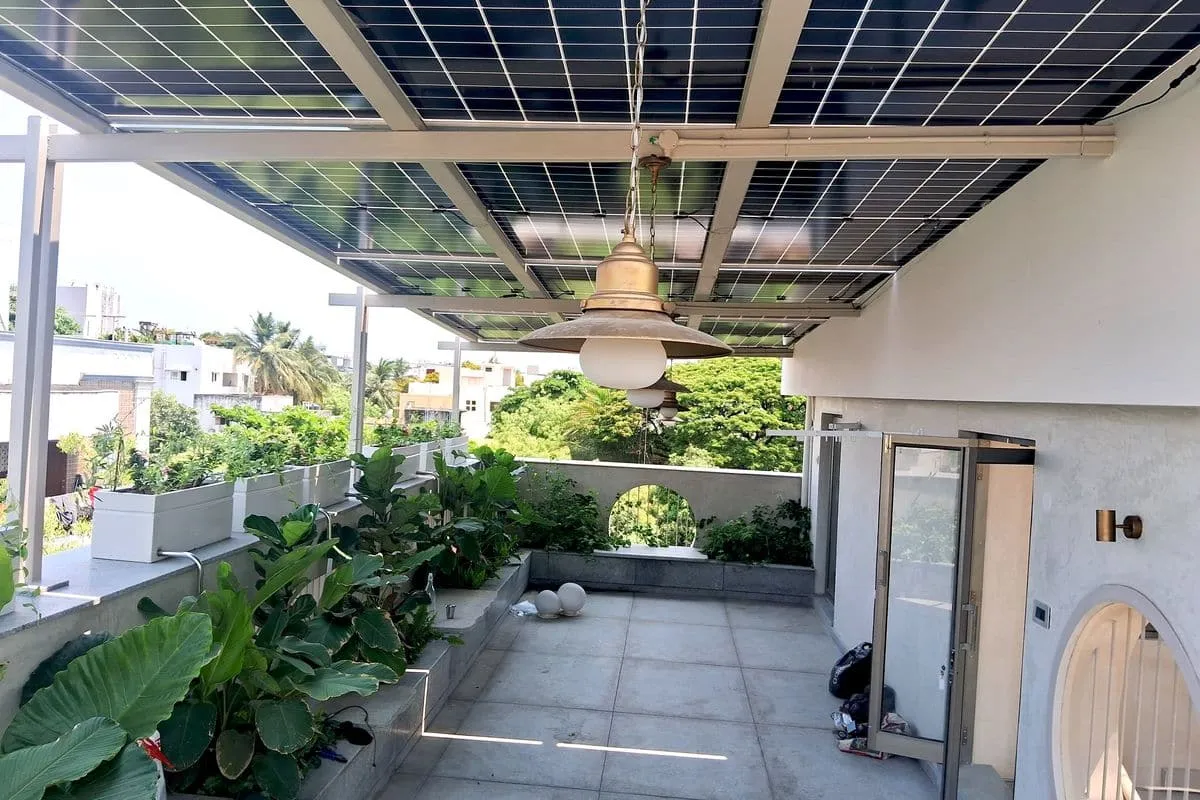
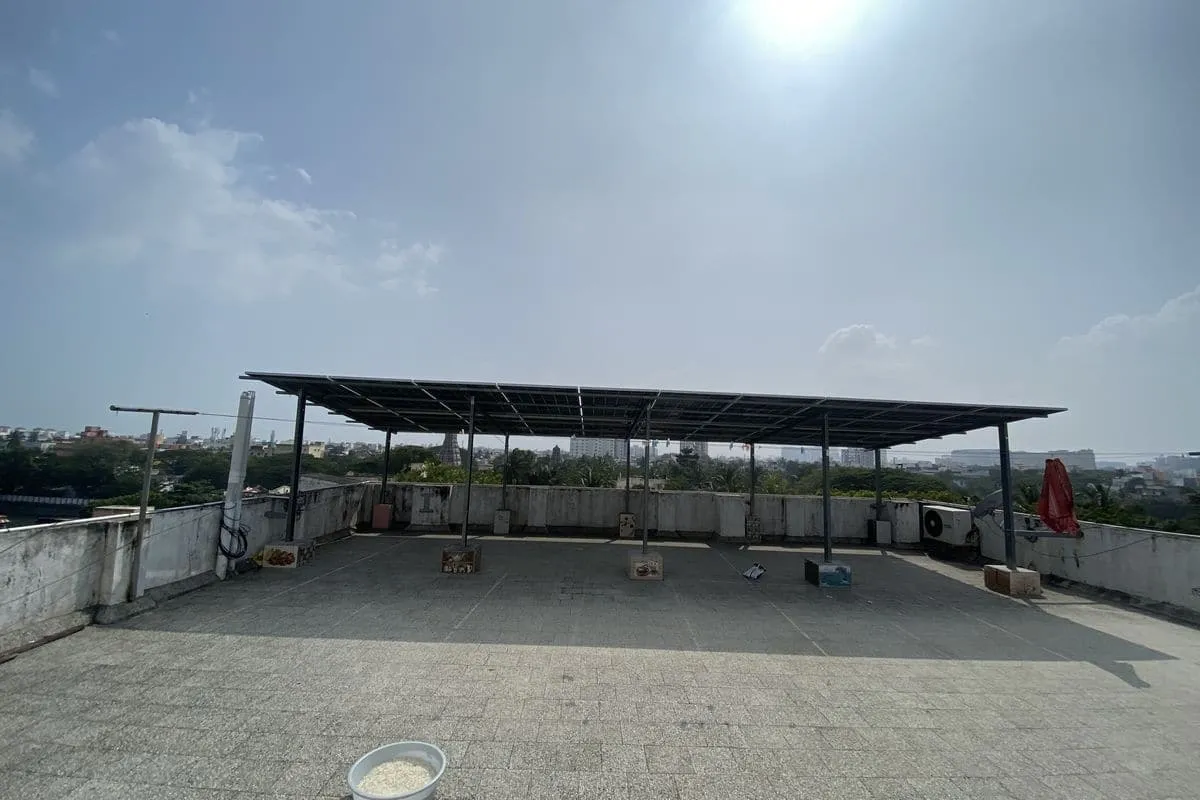
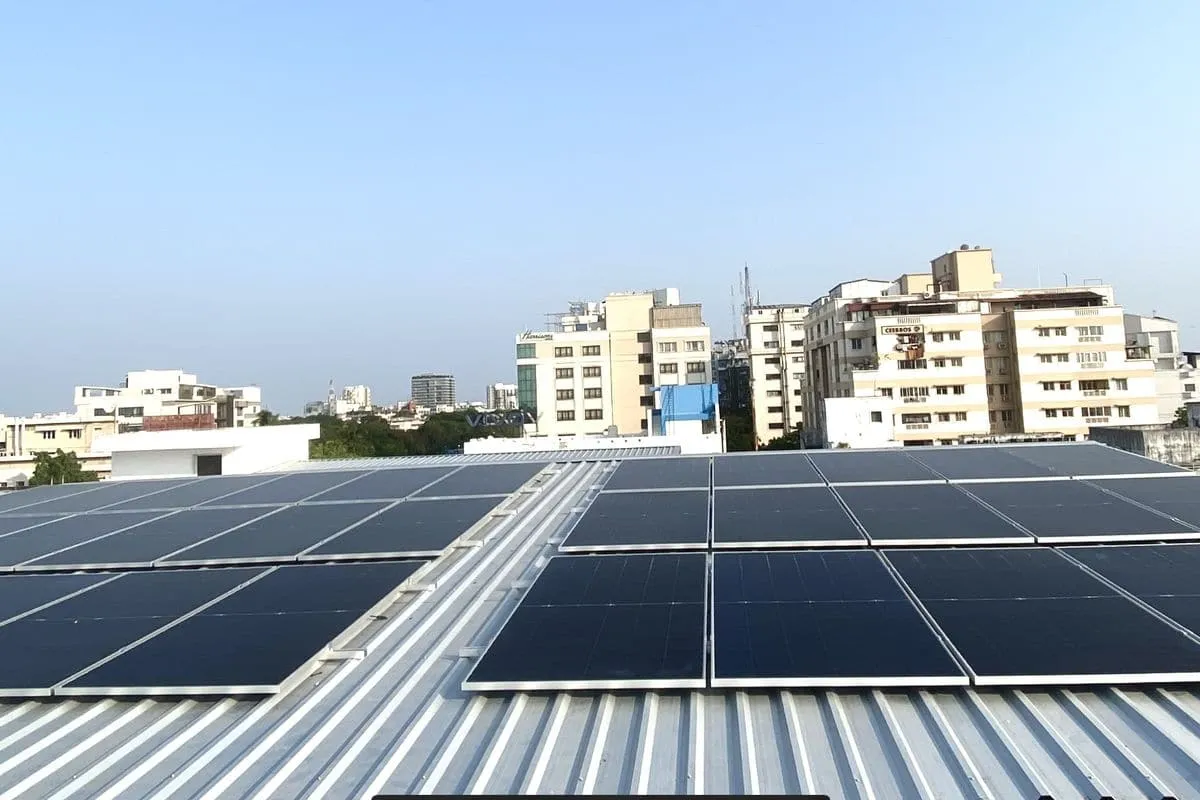
Instead of leaving that roof unused, a rooftop solar system can turn it into a source of electricity for the factory.
But installing solar for a factory is very different from putting a few panels on a house.
The system has to be designed around the factory's load profile, sanctioned load, tariff, roof structure, operating hours and future expansion plans.
This guide explains how solar for factories in Tamil Nadu works, how to size an industrial solar system, what it can cost, how the investment can be recovered and what to consider before choosing an EPC company.
The short version
Factories are well suited to rooftop solar because production often happens during the day, when solar panels are generating electricity.
The biggest savings come from using solar power directly inside the factory, reducing the amount of electricity purchased from the grid.
The right solar capacity depends on your electricity consumption, daytime load, peak demand, sanctioned load and available roof area.
A factory does not necessarily need batteries. For a facility that operates mainly during daylight hours, an on-grid system can often provide the best starting point. Battery storage becomes more relevant when there is significant night-time consumption or a requirement for backup.
CAPEX and OPEX are two different ways to finance a solar project. With CAPEX, the factory owns the system. With OPEX, a third party can finance and operate the system while the factory purchases the generated electricity under an agreed arrangement.
Most importantly:
Industrial solar should be designed from the electricity bill and load profile—not from the size of the roof alone.
Why are factories a good fit for solar?
A factory can have several characteristics that work in favour of rooftop solar.
Large roof areas
Factories and industrial buildings often have large metal or RCC roofs that can accommodate substantial solar capacity.
High daytime electricity consumption
Production machinery generally operates during working hours. This can align well with solar generation.
High electricity costs
For an industrial consumer, every unit of grid electricity replaced by solar can contribute directly to reducing operating costs.
Long operating hours
A factory operating from morning to evening can consume a large portion of its solar generation as it is produced.
This is important because self-consumption is usually more valuable than generating electricity that the factory does not immediately need.
The reference material highlights these same characteristics: large usable roofs, high daytime consumption, relatively high industrial tariffs and pressure to control operating costs.
How does industrial solar reduce a factory's electricity bill?
The basic principle is simple.
Without solar:
Grid → Factory
With rooftop solar:
Solar + Grid → Factory
During the day, solar power is generated on the factory roof and supplied to the facility.
If the factory is using 500 kW of power and the solar system is producing 400 kW at that moment, approximately 400 kW can be supplied by solar and the balance comes from the grid, subject to the system and electrical configuration.
That means the factory buys less electricity from the grid.
The more of your solar generation that is consumed within the factory, the more useful the system becomes.
This is why daytime load is one of the most important factors when designing industrial solar.
How much can a factory save with solar?
There is no single percentage that applies to every factory.
The actual savings depend on:
- Electricity tariff
- Monthly electricity consumption
- Daytime consumption
- Solar system size
- Available roof area
- Solar generation
- Export or settlement arrangement
- Sanctioned load
- Operating hours
- CAPEX or OPEX financing
- System performance and maintenance
A factory with heavy daytime production and enough roof space can potentially offset a substantial portion of its electricity cost.
The reference material uses up to 60–70% bill reduction as a best-case scenario, particularly for daytime-heavy operations. It also makes clear that actual savings depend on the site and operating conditions.
So rather than promising a fixed percentage, a proper solar assessment should calculate the expected savings for your factory.
How do you calculate the solar requirement for a factory?
The starting point is your electricity bill.
For an industrial facility, however, looking only at total monthly units is not enough.
You also need to understand when the factory consumes electricity.
Consider two factories:
| Criteria | Factory A | Factory B |
|---|---|---|
| Monthly consumption | 100,000 units | 100,000 units |
| Daytime consumption | High | Low |
| Night operation | Limited | Significant |
| Solar suitability | Higher | Lower |
| Battery requirement | Usually lower | Potentially higher |
Both factories consume the same amount of electricity.
But Factory A may be able to use much more of its solar generation directly because its production happens during the day.
This is why an industrial solar design should include a load study, not just a monthly-unit calculation.
What should be checked before sizing a factory solar system?
Several factors influence the final system size.
1. Electricity consumption
Start with your historical electricity bills.
Look at your monthly units and identify your typical consumption.
2. Daytime load
Solar generates during daylight hours.
Your installer should understand how much electricity the factory consumes during those hours.
3. Peak demand
A factory may normally consume a certain amount of power but experience much higher demand when several machines, motors, compressors or other equipment operate simultaneously.
Understanding peak demand helps engineers design the electrical system correctly.
4. Sanctioned load
Your sanctioned load is an important part of the electrical assessment and needs to be considered when planning the solar connection.
5. Roof area
The available roof determines how much solar can physically be installed.
6. Roof structure
The roof needs to be assessed for its condition, strength, mounting method, drainage and long-term suitability.
7. Shading
Water tanks, nearby buildings, trees, equipment and other structures can create shadows.
A proper shadow analysis should be carried out before finalising the panel layout.
8. Future expansion
If you're planning another production line, additional machinery or a factory expansion, it is worth considering how that will affect future electricity consumption.
These factors are also identified in the reference material as important inputs for industrial solar sizing.
How much roof area does an industrial solar system need?
The answer depends on the panel technology, panel wattage, layout and mounting arrangement.
As an example, the reference material uses approximately 350 sq. metres of shadow-free roof area for a 50 kW system as a general rule of thumb.
But the roof area should not be used by itself to decide the system size.
A factory may have enough roof space for 1 MW of panels but only consume a fraction of that electricity during the day.
In that case, installing the maximum possible capacity may not necessarily produce the best financial result.
The better question is:
How much solar can the factory use effectively?
What size solar system does a factory need?
There is no standard answer.
A small manufacturing unit might need a 50 kW system, while a larger industrial facility may require several hundred kilowatts or even a megawatt-scale rooftop plant.
As a starting point, the reference material provides indicative system sizes based on consumption bands.
| Typical consumption | Indicative solar capacity |
|---|---|
| 25,000–40,000 units | ~215–345 kW |
| 50,000–80,000 units | ~431–690 kW |
| 1,00,000–1,50,000 units | ~862 kW–1.3 MW |
These figures should not be treated as fixed sizing rules.
The actual capacity needs to come from a site-specific load study, roof assessment and electrical feasibility.
A system that is too small may leave significant savings on the table.
A system that is too large can increase the initial investment without providing equivalent additional value.
How much does solar for a factory cost?
Industrial rooftop solar pricing depends heavily on system size and project conditions.
The reference material gives an indicative 2026 range of approximately ₹30,000–₹50,000 per kW, with larger systems typically falling within different project-specific pricing bands.
As an indicative reference:
| System size | Indicative project cost |
|---|---|
| 50 kW | ₹15–25 lakh |
| 100 kW | ₹30–50 lakh |
| 200 kW | ₹60 lakh–₹1 crore |
| 500 kW | ₹1.5–2.5 crore |
| 1 MW | ₹3–5 crore |
These are indicative figures, not quotations.
The final cost can change depending on:
- Panel technology
- Panel make
- Inverter selection
- Structure design
- Roof height
- Roof type
- Electrical infrastructure
- Cable lengths
- Safety equipment
- Monitoring
- Battery storage
- Installation conditions
- O&M requirements
The reference also notes that battery storage can materially increase project cost.
CAPEX vs OPEX: How should a factory pay for solar?
A factory doesn't necessarily have to pay the entire solar investment upfront.
There are two common approaches.
| Criteria | CAPEX | OPEX / RESCO |
|---|---|---|
| Who invests? | Factory | Solar developer |
| System ownership | Factory | Developer |
| Upfront investment | Higher | Little or none |
| Electricity cost | Reduced after installation | Paid to developer at agreed rate |
| Long-term benefit | Higher ownership benefit | Lower initial financial commitment |
| Best suited for | Companies with available capital | Companies preserving working capital |
CAPEX
The factory purchases and owns the solar system.
The initial investment is higher, but the factory retains the long-term savings generated by the system.
OPEX / RESCO
A solar developer finances and owns the system.
The factory purchases the solar electricity under an agreed commercial arrangement, generally at a rate designed to be lower than its applicable grid electricity cost.
This can allow a factory to adopt solar without committing a large amount of capital upfront.
The reference material similarly describes CAPEX as an ownership model and OPEX as a developer-funded model.
What is the typical payback period for industrial solar?
For a CAPEX industrial rooftop solar project, the reference material gives a typical 3–5 year payback range, depending on the project.
The actual payback depends on:
System cost + solar generation + electricity tariff + self-consumption + financing + operating costs
A factory with high electricity tariffs and strong daytime consumption can potentially achieve a faster payback.
A facility with lower daytime usage, limited roof space or significant night-time consumption may have a different result.
This is why ROI should be calculated from your factory's actual electricity data rather than using an industry-wide number.
Do factories need batteries?
Not necessarily.
If your factory operates primarily during the day, an on-grid rooftop solar system may be sufficient.
Solar generation and factory consumption happen at roughly the same time, allowing the factory to directly use the electricity being generated.
A battery becomes more useful when:
- The factory operates significantly at night
- You want to store excess solar energy
- Backup power is important
- You want greater control over when stored energy is used
For a 24-hour factory, battery storage can potentially extend the usefulness of solar beyond daylight hours.
But batteries also increase the project cost, so they should be evaluated based on a specific operational requirement rather than added automatically.
What about solar for factories in Tamil Nadu?
Tamil Nadu has a large manufacturing base, making industrial rooftop solar particularly relevant for factories, warehouses and processing facilities.
For a factory in Chennai, Coimbatore, Hosur, Tiruppur, Salem, Madurai or other industrial areas, the solar assessment should account for the specific electricity connection and applicable regulations.
The important point is that industrial solar rules are not the same as residential rooftop solar.
Factories should not assume that residential subsidy schemes or residential metering arrangements apply to their connection.
Instead, the project should be evaluated based on the factory's consumer category, tariff, sanctioned load and applicable electricity regulations.
For larger industrial projects, the commercial structure and grid-connection arrangement should be established before finalising the project economics.
Why factory roof structure matters
Industrial roofs are not all the same.
A factory may have:
- Metal sheet roofing
- PEB structures
- RCC roofs
- North-light roofs
- Sloped roofs
- Older roofing systems
The mounting structure has to be designed for the specific roof.
Wind loads, roof condition, corrosion, drainage and access for maintenance all need to be considered.
The solar system should not simply be attached to an existing roof without understanding the structure underneath it.
For an industrial project, structural engineering is part of solar engineering.
What should you look for in an industrial solar EPC?
Choosing the right EPC partner is one of the most important decisions in a factory solar project.
Don't compare companies only on the price per kW.
Look for an EPC that can handle:
- Load analysis
- Shadow analysis
- Structural assessment
- Electrical design
- Solar generation modelling
- Equipment selection
- Project execution
- Utility coordination
- Safety systems
- Monitoring
- Commissioning
- O&M
The reference material similarly recommends looking for an industrial EPC with experience in industrial projects, proper engineering, quality components, structural and shadow analysis and long-term O&M responsibility.
A good EPC should be able to answer one simple question:
"Why is this the right solar system for my factory?"
If the answer is only:
"Because your roof is big enough,"
the assessment is incomplete.
What can a factory expect after installing solar?
The biggest benefit is straightforward:
Lower electricity costs.
But the benefits go beyond the monthly bill.
Lower operating costs
Solar can replace a portion of the electricity purchased from the grid.
Better control over energy costs
A solar system can reduce exposure to future electricity price increases.
Productive use of unused roof space
Instead of treating the factory roof as unused infrastructure, solar turns it into an energy-generating asset.
Reduced carbon emissions
Every unit generated by solar can reduce the amount of grid electricity required by the factory.
Support for sustainability goals
For manufacturers supplying larger domestic or international companies, renewable energy can also support corporate sustainability and supply-chain requirements.
A factory solar project should start with your electricity bill
The best place to start isn't the roof.
It's the power bill.
A proper feasibility study should examine:
How many units does the factory consume?
How much of that consumption happens during the day?
What is the factory's peak demand?
What tariff is being paid?
How much roof area is actually usable?
What solar capacity can be connected?
What happens to surplus generation?
Would CAPEX or OPEX make more sense?
Once these questions are answered, the economics become much clearer.
Is solar worth it for your factory?
For a factory with significant daytime electricity consumption, a suitable roof and a relatively high electricity cost, rooftop solar can be a compelling long-term investment.
But the right system isn't necessarily the largest system you can fit on the roof.
It is the system that gives you the best balance between generation, self-consumption, investment and long-term savings.
A properly designed industrial solar project can turn an unused factory roof into a productive energy asset while reducing one of the most important recurring costs in manufacturing.
And for a business, that is ultimately what solar should do:
not just generate electricity, but improve the economics of running the factory.
Frequently asked questions
How much can a factory save with rooftop solar?
Savings vary by factory. Daytime-heavy operations with high electricity consumption can potentially achieve substantial bill reductions. The reference material identifies up to 60–70% in best-case scenarios, but actual savings depend on the tariff, system size, daytime load, roof area and applicable regulations.
What size solar system does a factory need?
There is no standard size. Industrial rooftop systems can range from tens of kilowatts to several megawatts. The right capacity depends on electricity consumption, daytime load, peak demand, roof area and electrical requirements.
Is rooftop solar suitable for a 24-hour factory?
Yes, but the economics need to account for night-time consumption. A battery or other energy-storage solution can be considered if reducing night-time grid consumption or providing backup is important.
Do factories get solar subsidies in Tamil Nadu?
Residential solar subsidies should not be assumed to apply to industrial consumers. Factory projects should instead be evaluated under the applicable commercial/industrial electricity and renewable-energy framework.
Should a factory choose CAPEX or OPEX solar?
CAPEX can make sense when the factory wants to own the asset and has capital available. OPEX/RESCO can be attractive when the business wants to avoid a large upfront investment and preserve working capital.
How long does an industrial rooftop solar system last?
A well-designed and properly maintained industrial solar system is generally treated as a long-term asset, with a typical project life of around 25 years. Actual performance depends on equipment quality, installation, maintenance and operating conditions.
Does a factory need a solar battery?
No. Batteries are not mandatory for a standard grid-connected rooftop solar system. They become more relevant when the factory has significant night-time consumption, requires backup or wants to store excess solar energy.
What is the first step to installing solar for a factory?
Start with your electricity bills and load data. A proper industrial solar feasibility study should then assess your daytime load, peak demand, roof structure, shading, sanctioned load, available solar capacity and expected savings.